

How the Quiet Expansion into AI, XR, and Edge Computing Powers SEPs in AI Beyond Connectivity
The Quiet SEPs Expansion into AI XR and Edge Computing and SEP Licensing in Emerging Technologies
Key Takeaways
- Standard essential patents are shifting beyond connectivity into compute, perception, and intelligence layers.
- AI inference standards from MPEG and 3GPP create new licensing control points for machine learning operations.
- XR streaming standards in 3GPP Release 18 embed latency and synchronization requirements at the application layer.
- Edge computing SEP declarations since 2017 signal licensing obligations for distributed intelligence architectures.
- Global standards bodies ISO IEC ITU and ETSI announced coordinated AI governance frameworks in October 2024.
Introduction
Standard essential patents have long been the economic foundation of wireless connectivity and the global SEP licensing ecosystem. They enable interoperability while rewarding innovation in technologies such as 4G LTE and 5G. According to the WIPO, a standard essential patent protects an invention required to implement a technology standard, ensuring compatibility across products from different manufacturers. The 5G standard alone includes more than 25,000 SEPs, as noted by the Center for Strategic and International Studies, creating a multibillion‑dollar licensing ecosystem concentrated in telecommunications infrastructure.
What is less visible is the expansion of standards‑driven intellectual property into adjacent domains where connectivity was once only a supporting layer. SEPs are moving beyond connectivity into AI, XR, and edge computing patent ecosystems, extended reality synchronization, and edge computing orchestration. In this article, we explore how SEPs move beyond implementation choices, how XR streaming defines new latency control points, how edge computing declares its SEP position, and the strategic implications for licensing and competition.
AI Inference Standards and the Rise of Standard Essential Patents in AI
Artificial intelligence has historically been an implementation choice in wireless systems, but AI standardization frameworks are now emerging and deployed by vendors without formal standardization. In February 2025, 3GPP clarified that AI models are not standardized. Instead, the organization is creating mechanisms for data collection, model performance monitoring, and activation protocols across networks. This work, initiated in Release 18, prioritizes operator control and ensures interoperability.
- Encoding and Inference Layers: A major development is the formalization of AI at the encoding and inference layers. MPEG introduced MPEG‑AI (ISO/IEC 23888), enabling machine learning interoperability standards for multimedia processing. This suite includes standards for video coding for machines, feature coding for machines, and AI‑based point cloud coding. Unlike traditional compression designed for human viewing, these specifications optimize multimedia data for machine analysis. As a result, licensing discussions are gradually shifting from data transmission toward machine interpretation and action.
- Global Standardization Efforts: The European Telecommunications Standards Institute (ETSI) is coordinating AI standardization across multiple technical bodies supporting global AI governance frameworks, including cybersecurity and network intelligence. The International Telecommunication Union published its AI roadmap in November 2022. In October 2024, ISO, IEC, and ITU announced the 2025 International AI Standards Summit, responding to the UN Global Digital Compact’s call for stronger AI governance.
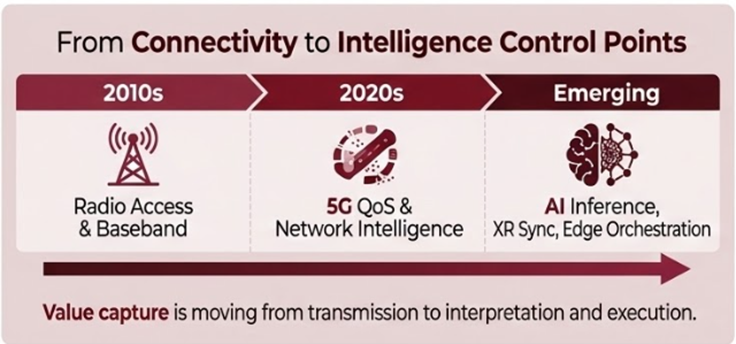
- Strategic Implications: AI‑driven systems now require interoperability guarantees creating new technology standards and patent licensing control points. As neural networks embed into autonomous vehicles, industrial automation, and other domains, interfaces for model transfer, data formatting, and inference protocols become potential SEP control points.
XR Streaming Standards Define New Latency Control Points in 5G Networks
Extended reality applications are driving new extended reality network standards for latency-sensitive services. 3GPP Release 18, the first 5G‑Advanced release, introduced architectural enhancements for 5G XR architecture and immersive media delivery. According to 3GPP, these include multi‑modality transmission support, PDU set‑based QoS handling, uplink‑downlink coordination, and power‑saving mechanisms tailored to XR devices.
Traditional QoS operated at the packet level, treating each IP packet independently. XR services require coordinated delivery of related packets that represent a single video frame or spatial audio sample. The PDU Set concept in Release 18 groups packets carrying a media unit, enabling differentiated handling based on the importance of specific frames within a stream.
3GPP’s work on XR goes beyond radio optimization into application awareness. The 5G system can now receive metadata from application servers on traffic patterns and burst timings. This allows the radio access network to configure discontinuous reception cycles aligned with XR frame rates, reducing power use without harming user experience.
These enhancements create dependencies that extend into the application layer. Any XR platform aiming for optimal performance over 5G‑Advanced must interface with these standardized mechanisms. This makes the underlying patents essential for market participation.
Edge Computing and the Rise of Edge computing Standard Essential Patents
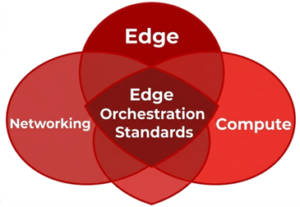
The convergence of 5G and edge computing has created a distinct category of standard essential patents. Research from IPlytics and LexisNexis IP shows that between 2017 and 2020, patents describing edge computing technologies began shaping the edge computing patent landscape, with declarations rising as specifications matured. Edge computing is consequential because it sits at the intersection of networking, compute, and application logic. Unlike traditional SEPs that governed radio interfaces, edge standards define how applications discover compute resources, enforce data sovereignty, and maintain service agreements as workloads shift dynamically. The licensing impact is significant. Participation in edge‑enabled services requires navigating the broader standards essential patent landscape than connectivity alone. Implementers face obligations not only to infrastructure vendors holding cellular SEPs but also to patent holders whose technologies enable orchestration, security, and performance management.
Strategic Implications for Licensing and Competition
The expansion of SEPs into AI, XR, and edge computing expands SEP licensing in emerging technologies. CSIS analysis shows that control over standards-setting brings geopolitical advantages, allowing nations to direct technology toward domestic priorities. The IEEE Standards Association updated its patent policy in January 2023 to address FRAND licensing tensions. The changes improve clarity and provide options, but disputes remain over what is fair and non‑discriminatory. For technology companies, SEP growth in adjacent domains creates both opportunity and risk. Strong portfolios in AI inference, immersive media, or edge orchestration can drive new licensing revenue. At the same time, multi‑industry exposure increases complexity in compliance and negotiation.
Future Outlook
Standard essential patents are evolving toward next generation technology standards in AI, XR, and edge computing. This shift recalibrates where value is captured in technology stacks. Companies once focused on radio access networks now hold patents relevant to machine interpretation, immersive synchronization, and edge workload distribution. Licensing obligations extend beyond telecom equipment to cloud platforms, AI developers, and XR providers. Competitive advantage will depend on early recognition of these dependencies and strategic choices in standards participation, portfolio acquisition, and multi‑domain licensing agreements.
Recommendations for Stakeholders
- Technology Implementers: Assess SEP exposure across AI, XR, and edge early to build proactive licensing strategies.
- Platform Providers: Embed SEP compliance into product design to avoid downstream conflicts.
- Standards Participants: Define what is truly essential to strengthen credibility in consensus processes.
- Policymakers: Balance innovation incentives with fair market access as SEP licensing expands into AI and XR.
- Investors: View SEP portfolios in AI, XR, and edge as appreciating assets while evaluating enforceability across jurisdictions.