
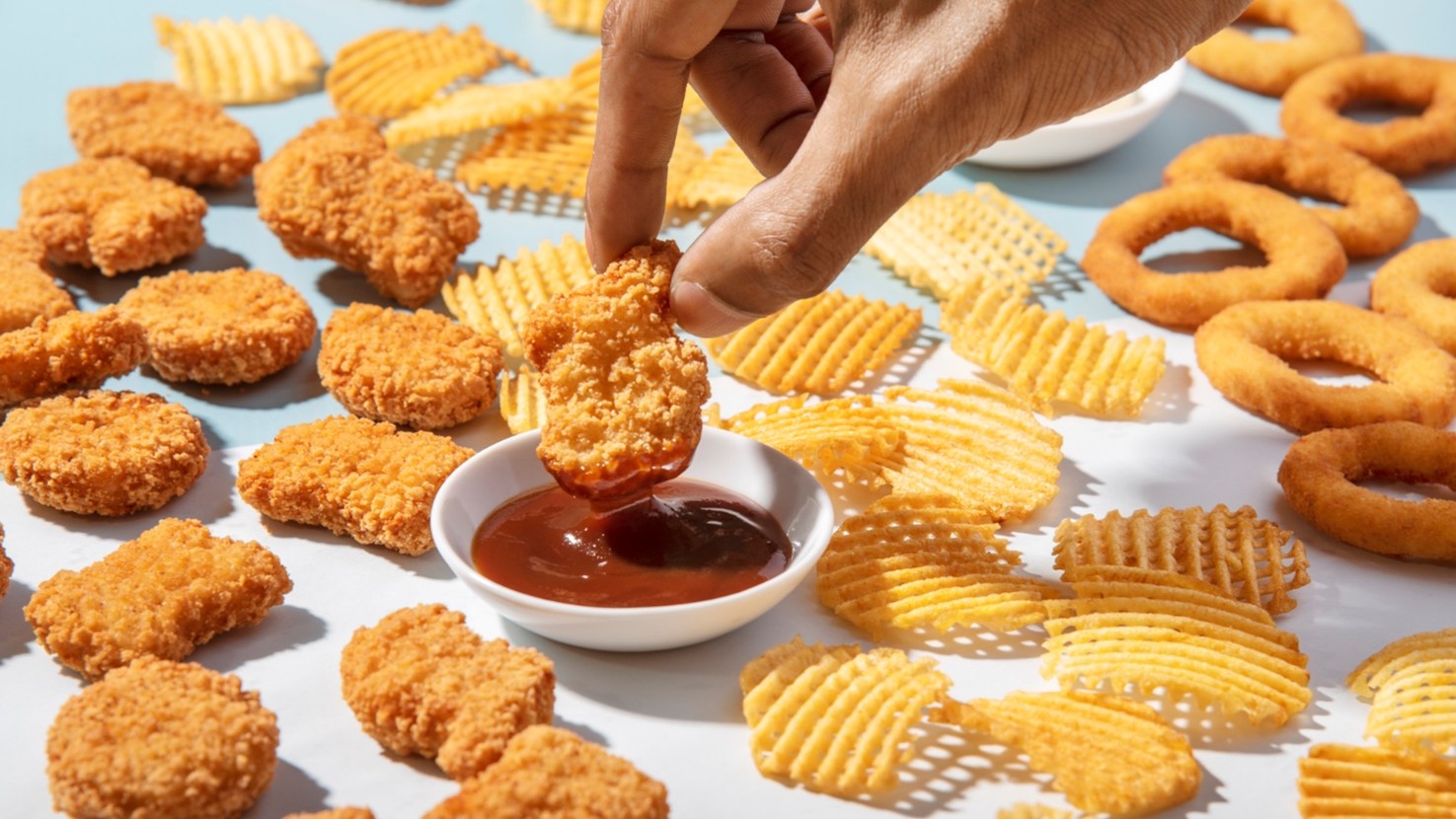
Beyond the dinner plate: How technical formulation and packaging shifts are creating a $3.3B+ opportunity.
EXECUTIVE TAKEAWAY
- Market Opportunity: The $3.3B meat snacks market is shifting from beef-dominated to poultry-driven growth, with protein snacks projected at 1% CAGR through 2034.
- Technical Barrier is Competitive Moat: Achieving USDA-compliant shelf stability (water activity < 0.85 aw) while maintaining tender, bite-able texture requires specialized R&D in humectants, marination, and oxygen barrier packaging, creating defensible IP.
- Format Innovation Drives Adoption: Success hinges on packaging that signals “ambient snack” not “deli case.” Single-serve sticks/bites with resealable closures are winning 15-20% higher repeat rates in C-store channels, growing 5-7% annually.
- Co-Pack to Control: Start with co-packers (3-6 months to market, 10-15% margin trade-off) to validate demand. Scale to in-house production ($2-5M CapEx) only when sustained volume justifies margin recapture and IP protection.
- Entry Barrier: This is not a marketing play; it’s a systems challenge spanning formulation science, USDA compliance, packaging engineering, and retail strategy. Brands with cross-functional depth will capture the whitespace.
Chicken has spent decades trapped in the center of the dinner plate. While beef jerky and sticks have evolved into premium lifestyle products, chicken has largely remained a meal component. That is changing rapidly. With the US meat snacks market reaching $3.3 billion, brands are realizing that beef innovation is hitting a ceiling. The real growth engine is now poultry.
Why now? Several forces are converging. First, protein snacks are projected to grow at 12.1% CAGR globally through 2034, with US consumers specifically seeking leaner options. Second, advances in HPP (High Pressure Processing) and controlled atmosphere drying have made shelf-stable poultry economically viable for the first time. Third, the C-store channel is growing faster than traditional grocery, and these retailers prioritize grab-and-go formats that don’t require refrigeration.
This isn’t just about volume; it is about occasion. Consumers are no longer just eating chicken for fuel at dinner. They want it for breakfast as well as convenient ready to eat mid-day snacks, but simply shrinking a chicken breast into a bag doesn’t work.
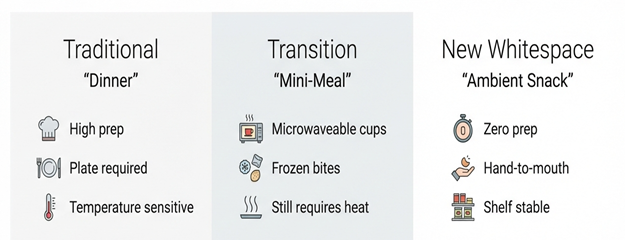
Areas Where Brands Get Stuck
1. The Formulation Paradox
Many early entrants in chicken snacking failed because they treated chicken like beef. They underestimated the technical complexity of drying poultry.
Beef has a robust flavor profile and fat structure that forgives the drying process but chicken does not. When chicken is dehydrated to meet shelf-stability standards, it tends to become brittle, chalky, or rubbery. This stems from chicken’s inherent composition: approximately 75% water and only 3-5% fat compared to beef’s higher intramuscular marbling.
This is the primary barrier to entry. To achieve a shelf-stable product without refrigeration, the water activity (aw) must be lowered below specific thresholds to prevent pathogen growth (like Salmonella and Listeria). USDA FSIS guidelines generally require an aw of < 0.85 for shelf stability without pH control. This is not negotiable.
Drying chicken to ≤0.85 aw without formulation support typically leads to excessive moisture loss and a brittle, “wood chip” texture. Our review of commercial winners shows that successful players actively mitigate this through humectant-led formulations and advanced marination. For example, Chef’s Cut and Buffalo Bills Jerky incorporate honey, molasses, or sugar-rich marinades to bind water while still meeting shelf-stability targets, resulting in a softer, chewable bite. Similarly, Mighty Spark’s chicken snack sticks use honey and fruit-derived ingredients within the marinade system to maintain texture at low aw. These brands demonstrate that controlled humectant use, combined with optimized marination and drying, is a proven pathway to achieving low aw without compromising eating quality. Some innovators are layering in glycerol, but that word appears on ingredient panels and triggers clean-label concerns.
There’s also the flavor dimension. Chicken’s mild taste means any off-notes from processing (oxidation, rancidity) become immediately apparent. Beef can mask these with its stronger umami profile. Chicken cannot. This requires oxygen barrier films, nitrogen flushing, and sometimes natural antioxidants like rosemary extract all of which add cost.
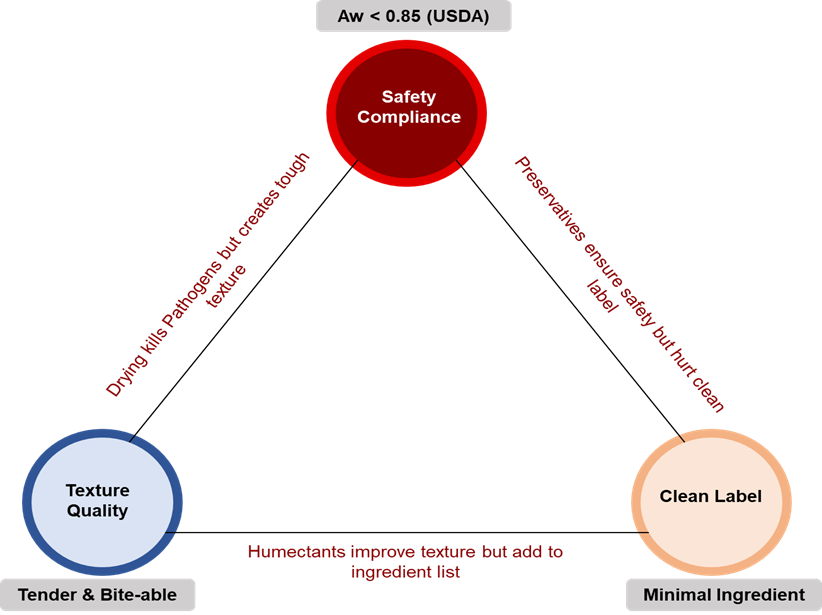
Figure 1: The Technical Trilemma of Shelf-Stable Chicken
2. Not Using Packaging as a Growth Lever
If formulation is the barrier to entry, packaging is the accelerator. The “bag of jerky” format is saturated. The whitespace lies in formats that solve specific user friction points.
We are seeing C-store foodservice grow by 5% in 2024, with projections of 5.7% growth in 2025. These shoppers are looking for portability. They want one-handed consumption that doesn’t leave residue on the steering wheel or keyboard. This is why “sticks” and “bites” are outperforming traditional slabs. Form factor matters.
Resealability is also critical. A 2.5oz bag of chicken chips is too much for one sitting but too expensive to waste. Resealable zippers transform a single-purchase product into a multi-day habit, increasing the perceived value to the consumer.
Packaging also functions as a category signal. Most consumers still associate chicken with refrigeration. Your pack needs to visually communicate “shelf stable” without saying it explicitly. This is where design does heavy lifting. Matte finishes, earth tones, and “protein badge” call-outs on the front panel help position the product in the premium snack set rather than the deli case.
Finally, packaging determines placement. Single-serve formats (under 1.5oz) get impulse placement at checkout. Multi-serve (2.5-4oz) goes into the snack aisle. The decision between these formats is not just about consumer preference; it’s about where you can secure shelf space and what margin structure the retailer will accept.
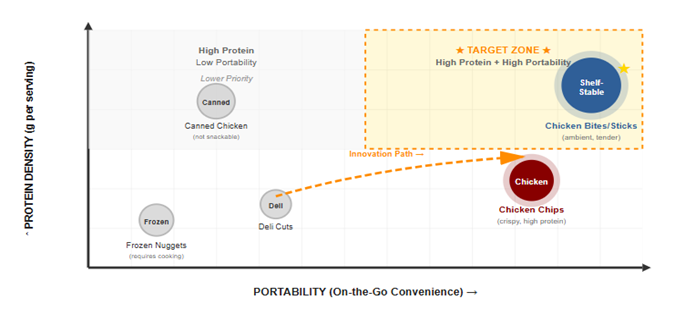
Figure 2: Packaging Format Opportunity Map
Most brands will not mention that resealable packaging innovation has driven tangible improvements in retail velocity. Brands that integrate tear-strip + zipper closures report 15-20% repeat purchase rates compared to single-use formats.
Recommendations for Stakeholders
The “Snackable Chicken” category is currently where Greek Yogurt was in 2005 poised for rapid expansion but waiting for the right format to unlock mass adoption.
The winners will not be the brands that simply launch “chicken jerky.” The winners will be those that engineer a texture that feels like real food, package it for the C-store consumer, and navigate the safety hurdles without compromising the clean label. This requires simultaneous expertise in formulation science, regulatory compliance, packaging engineering, and retail strategy.
Based on the current market dynamics, technical barriers, and growth trajectories, the following strategic actions are recommended for key industry participants.
- Brand manufacturers (cpg) should focus on texture R&D: Move beyond standard dehydration. Investigate vacuum-frying or hybrid air-drying technologies to solve the “wood chip” texture issue without relying heavily on glycerin, which compromises clean label positioning.
- Retailers should focus on merchandising & placement: Create a “Lean Protein” Set, Carve out shelf space adjacent to beef jerky but distinctly signed as “Alternative Protein” or “Lean Snacking.” Do not bury premium chicken snacks in the generic meat stick set where they compete directly on price with mass-market beef sticks.
- Co-packers & manufacturers should focus on capacity & safety: Segregate Poultry Lines, establish dedicated poultry processing zones now. The scarcity of USDA-certified poultry co-packing for shelf-stable snacks is a major bottleneck. Offering “turnkey” poultry compliance will allow you to charge a premium over beef processing.